
Month-by-Month Bali Surf Guide
Bali is a year-round surf destination, thanks to its consistent waves and warm waters (75–86°F). The island's surf conditions are shaped by two seasons:
- Dry Season (April–October): West coast spots like Uluwatu and Padang Padang deliver powerful reef breaks for advanced surfers. Beginners can enjoy gentler waves at Kuta and Canggu.
- Wet Season (November–March): East coast breaks like Keramas and Nusa Dua offer smoother, glassy waves suitable for intermediates and beginners.
Key Takeaways by Month:
- Best for Beginners: May, June, September (gentle beach breaks).
- Ideal for Intermediates: April, May, September, October (consistent swells and smaller crowds).
- Advanced Surfers: June–August (6–8+ foot swells, challenging reef breaks).
Plan your trip based on your skill level and season. For tailored surf camps and itineraries, check out tools like Find Surf Camp Bali. Whether you're chasing barrels or learning the basics, Bali has waves for everyone.
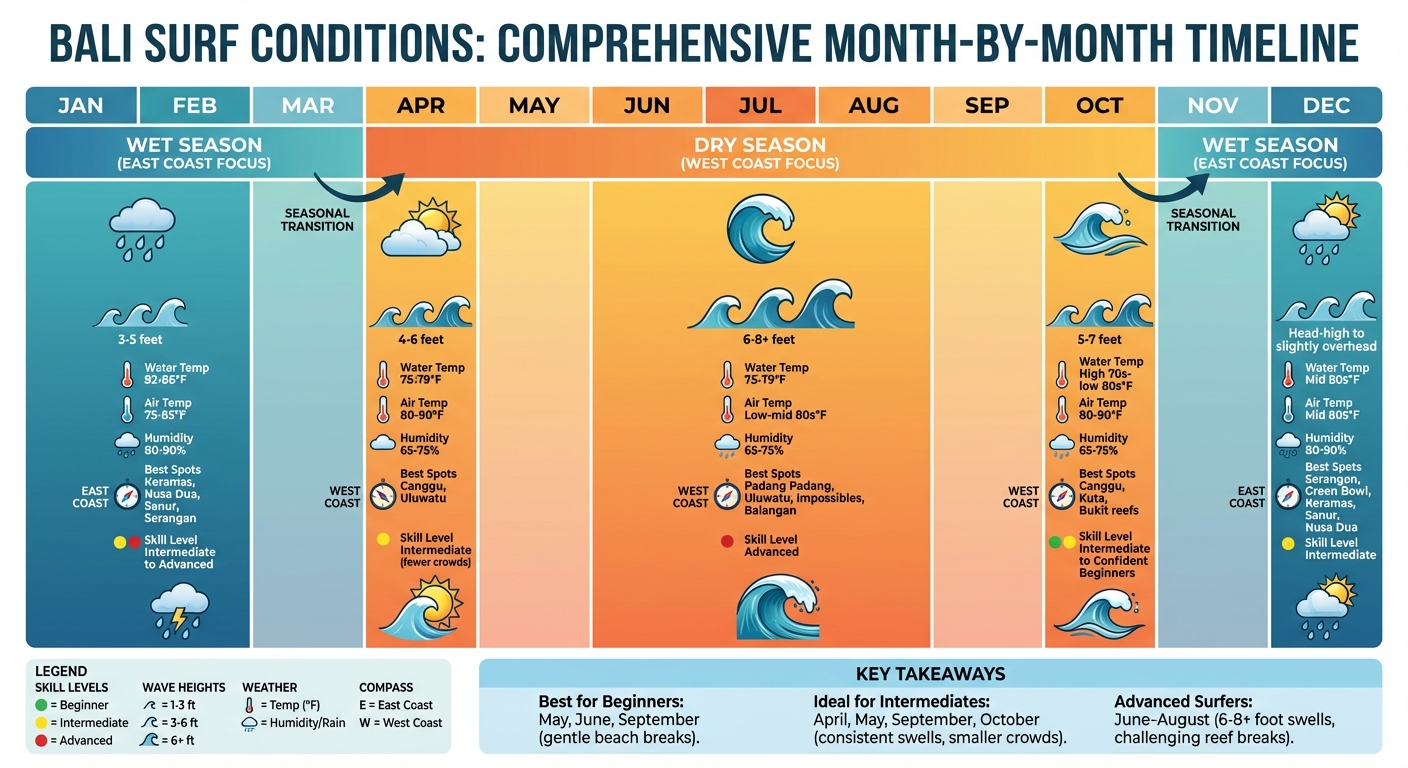
Bali Surf Conditions by Month: Wave Heights, Best Spots & Skill Levels
Bali Surf Journal – February 2024
Bali's Two Surf Seasons Explained
Bali experiences two distinct surf seasons, shaped by monsoonal winds. Each season offers unique wave conditions and surf spots, ensuring there's something for everyone, whether you're chasing barrels or just starting out.
Dry Season (April–October)
During the dry season, southeast trade winds dominate, creating excellent offshore conditions along the west coast and the Bukit Peninsula. Expect consistent southwest swells, starting at 4–6 feet in April and building to 6–8+ feet by July. The water temperature drops slightly, ranging between 75–79°F (24–26°C), and the humidity decreases to a more comfortable 65–75%. Rainfall is minimal, averaging just 2–4 inches per month.
This season is perfect for experienced surfers, with renowned reef breaks like Uluwatu and Padang Padang delivering powerful, barreling waves under offshore winds. For those seeking less intense conditions, the beach breaks at Canggu and Kuta offer more forgiving waves, making them ideal for beginners and intermediate surfers.
As the winds shift with the seasons, the surf conditions transform, bringing new opportunities on Bali's east coast.
Wet Season (November–March)
From November to March, westerly winds take over, creating onshore conditions on the west coast but turning the east coast into a surfer's haven. Northeast swells produce waves in the 3–5-foot range, which are perfect for learners and intermediates. The water warms up significantly, reaching 82–86°F (28–30°C), though you'll contend with higher humidity (80–90%) and increased rainfall of 6–8 inches per month. While rain showers are common, sunny intervals still make for enjoyable surf sessions.
The east coast spots like Keramas, Nusa Dua, Sanur, and Serangan shine during this time. With offshore westerly winds, these locations offer smooth, glassy waves. Nusa Dua, in particular, is a great choice for families or those looking for gentler, longer rides thanks to its reef-protected breaks.
Environmental Factors That Affect Surf Quality
Local conditions play a huge role in shaping the surf experience in Bali, beyond the seasonal wind and swell patterns.
Reef breaks and beach breaks offer distinctly different challenges. The Bukit Peninsula's reef breaks - like Uluwatu, Padang Padang, Impossibles, and Balangan - amplify swells into steep, hollow waves. These breaks are best suited for experienced surfers and perform optimally at low to mid tide. On the other hand, beach breaks such as Kuta Beach, Canggu, and Sanur provide softer waves with sand bottoms, making them safer and better for progression.
Timing is everything when it comes to scoring the best waves. Reef breaks generally deliver their best conditions at dawn, with light offshore winds and mid to low tide. As the day progresses and trade winds strengthen, the surface can become choppy, so early sessions are key for glassy, rideable waves. These factors not only influence your surf experience but also play a role in the selection of surf camps listed on Find Surf Camp Bali.
Monthly Surf Conditions Breakdown
January
January falls in the middle of Bali's wet season, bringing frequent heavy rains and high humidity levels between 80–90%. The air stays warm at 75–85°F, while the water temperature hovers at a balmy 82–86°F - perfect for surfing in boardshorts or a light rashguard. Rain tends to come in short, intense bursts, so the best surf sessions often happen in the early morning, before onshore winds and stormy conditions take over later in the day.
The east coast is where you'll find the best waves this time of year. At Keramas, expect powerful, hollow right-handers breaking over sharp reefs, ideal for intermediate to advanced surfers who can handle quick takeoffs and challenging sections. Nusa Dua offers long, powerful right-hand walls on its outer reefs, which are usually accessed by boat and draw moderate crowds. Meanwhile, spots like Sanur and Serangan deliver reef breaks with mechanical walls and occasional barrel sections during the right tide, making them a favorite for confident intermediates.
April
April marks the transition to Bali’s dry season, bringing clearer skies and more consistent surf conditions. Rainfall decreases noticeably, humidity drops to around 65–75%, and air temperatures rise to 80–90°F. With lighter, more variable winds, both the east and west coasts enjoy extended periods of clean, glassy waves, offering multiple opportunities for great sessions throughout the day.
Swells typically range between 4–6 feet with longer periods and more consistent sets. This is when the west coast starts to shine. Canggu becomes a hotspot with its mix of reef and sand-covered peaks, offering both lefts and rights. Popular breaks like Old Man’s and Echo Beach can get crowded, but they’re worth it for the quality waves. Uluwatu also comes alive, with user-friendly sections that evolve into powerful barrels as the swells grow. Early in the month, with fewer tourists around, April is a prime time for intermediates looking to improve their skills.
July
July represents the height of Bali’s dry season, bringing powerful long-period swells from the Southern Ocean. Waves typically range from 6–8+ feet, paired with strong southeast trade winds that blow offshore along the west coast. Water temperatures dip slightly, prompting some surfers to wear shorty wetsuits, while air temperatures stay in the low-to-mid 80s°F. The brisk trade winds can make evenings and boat rides feel cooler.
The Bukit Peninsula becomes the epicenter of surf action. Padang Padang delivers heavy, hollow lefts best suited for advanced surfers. Uluwatu offers multi-section lefts with strong currents and sharp reefs, while Impossibles and Balangan provide long, workable walls. Beginners are better off sticking to more sheltered spots like the gentler breaks of Canggu or Kuta, or targeting smaller tides at less intimidating locations.
October
October offers a more balanced surf experience, blending the intensity of peak dry season with milder conditions. Swells generally measure around 5–7 feet, making it a great month for both intermediates and confident beginners. Air temperatures remain steady at 80–90°F, and water temperatures sit comfortably in the high 70s to low 80s°F. Shifting winds create flexible surf windows, allowing both coasts to offer good conditions at different times.
While some east coast spots start to show promise during lighter wind periods, west coast staples like Canggu, Kuta, and the Bukit reefs continue to deliver consistent quality. October stands out as a fantastic month to explore Bali’s surf scene, offering solid waves and fewer crowds compared to the peak dry season.
December
December brings the return of Bali’s wet season, with warm waters and variable winds. Both air and water temperatures stay in the mid-80s°F, making surfing comfortable despite occasional downpours. Early morning or late afternoon sessions are your best bet to avoid heavy rain and mid-day onshore winds, while sunny breaks between storms still allow for enjoyable surf days.
East coast spots like Serangan, Green Bowl, Keramas, Sanur, and Nusa Dua offer medium-energy waves, often head-high or slightly overhead, breaking over exposed reefs when north or northeast swells dominate. While the west coast can still deliver surf early in the month during calmer wind periods, the quieter lineups and lower prices for accommodations and surf services on the east make December an appealing time to visit for intermediate surfers.
sbb-itb-de7840d
Choosing the Right Month for Your Skill Level
Matching your skill level with Bali's surf conditions throughout the year can make all the difference in your experience. Beginners will find the dry season (April through October) ideal, especially on the west coast. Spots like Kuta Beach and Batu Bolong in Canggu feature smaller, consistent waves in the 3–5-foot range, along with sandy bottoms and offshore winds. These conditions create a safer space for learning, free from sharp reefs or strong currents. Kuta, in particular, is a classic choice for first-timers, offering gentle, rolling waves perfect for practice. During the wet season (November–March), the east coast comes into play, with Nusa Dua offering calm, reef-protected breaks and long, gentle waves that are great for building confidence.
For intermediate surfers, the shoulder months (April–June and September–October) are prime time. Swells during these periods range from 4–7 feet, hitting both coasts and offering a variety of challenges. Echo Beach in Canggu provides forgiving beach breaks where you can refine your maneuvers, while Balangan delivers punchier reef sections to take your skills up a notch. If you're after longer rides, head to Medewi on the west coast, known for its mellow, left-hand point break that’s perfect for practicing linked turns. Plus, the lighter crowds during these months mean more opportunities to catch waves.
Advanced surfers looking for serious challenges should plan their trip for the peak dry season (July and August). During this time, the Bukit Peninsula becomes a playground for experienced surfers, with consistent swells reaching 6–8+ feet. Legendary reef breaks like Uluwatu, Padang Padang, Bingin, and Impossibles serve up powerful left-hand barrels, demanding expert-level skills and confidence in tough conditions. For slightly less crowded but equally impressive waves, consider visiting in September or early October, when the swells are still pumping but the crowds thin out.
How to Plan Your Bali Surf Trip
Planning a surf trip to Bali is all about timing and preparation. With its seasonal surf patterns, understanding the best times to visit, prioritizing safety, packing the right gear, and finding suitable accommodations can make all the difference.
Safety Tips by Season
Surfing in Bali comes with seasonal challenges, so knowing what to expect can help you stay safe.
During the dry season (April–October), the west coast is famous for its powerful reef breaks, but these can be tricky to navigate. Spots like Uluwatu and Padang Padang often see swells reaching 6–8+ feet, and the sharp coral combined with strong currents demands caution. Water temperatures can drop to around 75–79°F (24–26°C) during July and August, so reef booties are a must for navigating shallow entries and exits. If you're unfamiliar with the area, consider hiring a local guide and reviewing channel maps beforehand. Crowds peak between June and August, increasing the chance of collisions, so aim for early morning sessions and respect local surf etiquette.
The wet season (November–March) shifts the action to the east coast, where waves are generally smaller and more manageable. However, sudden storms, heavy rainfall, and river runoff - especially near river mouths - can create hazards. Always check daily forecasts, avoid surfing during lightning or squalls, and stick to reef-protected spots like Nusa Dua or Keramas when conditions are uncertain. Regardless of the season, applying reef-safe sunscreen and carrying a basic first-aid kit are smart habits for any surfer.
Once you've got safety covered, it’s time to think about your gear.
What Gear to Bring Each Season
Bali’s warm waters make it a year-round surfing destination, but your gear should match the season.
From April to June, pack a long-sleeve rashguard, reef-safe sunscreen, and a thin wetsuit or neoprene top for those cooler early-morning sessions during the seasonal transition. In July and August, when water temperatures dip slightly and the swells get bigger, many surfers add an extra neoprene layer and use a heavy leash for better control in larger waves.
By September and October, conditions mellow out, and standard warm-water gear - like boardshorts or a bikini paired with a rashguard - works perfectly. Don’t forget a backup leash and extra wax for daily sessions. During the wet season (November–March), a light rain jacket, quick-dry clothing, and reef booties are especially helpful for surfing east-coast breaks or near river mouths. High UV levels persist year-round, so waterproof sunscreen, a wide-brim hat, and polarized sunglasses are essentials. A compact dry bag for your valuables, a microfiber towel, and a small medical kit can also come in handy for any surf trip.
With safety and gear sorted, planning accommodations and surf spots becomes much easier.
Using Find Surf Camp Bali to Plan Your Trip
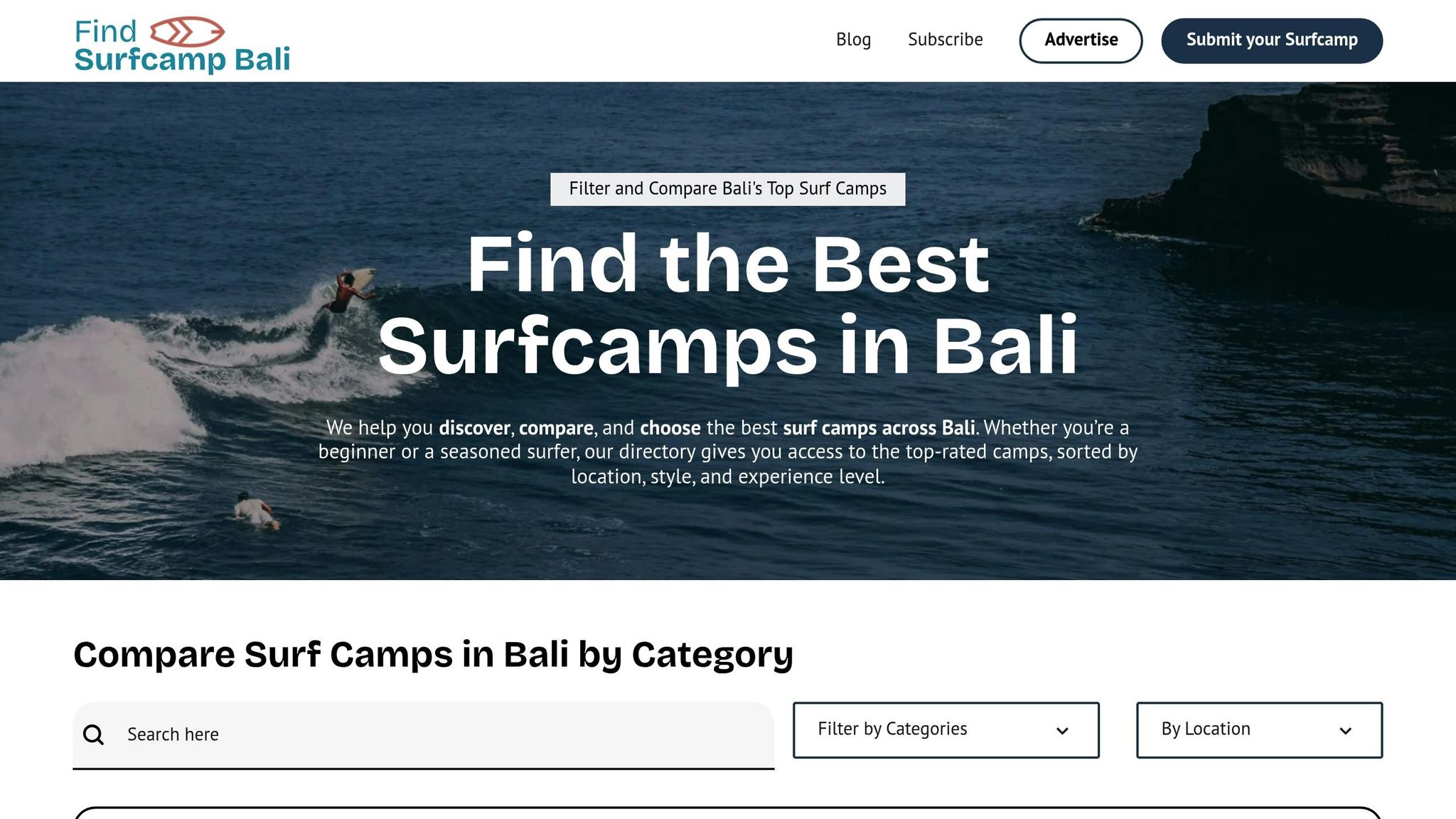
Find Surf Camp Bali’s directory is a great tool for matching your travel dates with the best surf conditions and accommodations suited to your skill level. Use the platform’s filters to explore camps by location - opt for west-coast spots like Canggu, Kuta, and Seminyak during the dry season or east-coast destinations such as Keramas and Nusa Dua when the wet season rolls in with gentler waves.
The "Plan Your Surf Trip in Seconds" feature makes trip planning a breeze. Simply input your dates, select your destination, and add your favorite surf spots to create a personalized day-by-day itinerary aligned with seasonal conditions. You can even filter camps based on amenities like private coaching, equipment rentals, video analysis, or yoga classes to tailor your experience to your needs.
Conclusion
Bali’s surf scene shifts with the seasons. The dry season lights up the west and southwest coasts with challenging swells, while the wet season delivers more approachable waves on the east. For those seeking a middle ground, April–June and September–October are excellent shoulder months, offering consistent waves without the intensity of peak crowds or conditions. Meanwhile, the east coast - spots like Keramas, Nusa Dua, and Sanur - remains a solid choice year-round, with fewer surfers in the lineup and more budget-friendly options.
Planning your trip around your skill level and goals is essential. Beginners will find the west coast ideal from late April to June or September to October, while November through March on the east coast provides gentler waves. Advanced surfers chasing heavy barrels should aim for June–August on the Bukit Peninsula. If you’re after quieter sessions and better deals, shoulder months like April, May, September, and November are ideal, offering great waves without the July–August crowds. With water temperatures hovering between 75–86°F, a thin wetsuit or spring suit is handy for cooler mornings in July and August. And don’t forget reef booties - they’re a must for navigating shallow entries.
To make planning easier, Find Surf Camp Bali is a great resource. It helps match your travel dates, skill level, and budget with the perfect surf camp. Whether you’re looking for west-coast camps during the dry season or east-coast options for wet-season consistency, the platform’s filters let you pinpoint camps with perks like private coaching, video analysis, and yoga. Their "Plan Your Surf Trip in Seconds" tool makes it simple to align your itinerary with the best seasonal conditions.
No matter when you visit, Bali promises waves for every surfer. Whether you’re mastering your first ride or chasing double-overhead barrels, the island has a break - and a season - ready for you.
FAQs
When is the best time for beginner surfers to visit Bali?
The best time for beginner surfers to head to Bali is during the dry season, which runs from May to September. These months bring sunny skies, calmer seas, and smaller, more predictable waves - just right for those learning to surf.
Bali’s east coast is home to many beginner-friendly surf spots during this time. These locations offer gentle waves and a safe setting for picking up the basics. With ideal weather and surf conditions, it’s the perfect opportunity to improve your skills while soaking up the beauty of Bali’s breathtaking beaches.
How do Bali's dry and wet seasons impact surfing conditions?
Bali’s seasons have a significant impact on its surf conditions. The dry season, running from May to September, is a dream for surfers. With steady offshore winds, clear skies, and top-notch waves, popular west coast spots like Uluwatu and Padang Padang offer ideal conditions. Whether you’re a beginner or a seasoned pro, this is the time to hit the water.
On the flip side, the wet season (October to April) brings heavier rainfall and onshore winds, which can lead to choppier and less predictable waves, particularly on the east coast. But don’t rule it out - this season also delivers bigger swells and smaller crowds, making it perfect for experienced surfers chasing big-wave thrills.
What surf gear should I pack for Bali year-round?
When heading to Bali for surfing, it's smart to pack a variety of surfboards to handle the island's diverse wave conditions. A shortboard is ideal for tackling bigger, more powerful waves, while a longboard or foamie works well for smaller, beginner-friendly surf. Don’t forget essentials like rash guards, a light wetsuit or spring suit for the cooler months (June through September), reef-safe sunscreen, surf wax, and a sturdy surf leash. A waterproof bag for your valuables and a quick-dry towel can also come in handy. While surf camps and rental shops are widely available, bringing your own gear ensures you're always prepared and comfortable in the water.
Related Blog Posts
Subscribe to receive the latest blog posts to your inbox every week.
